Plutarch: Symbolism of History
With Pavel Shchelin


Plutarch: Symbolism of History
With Pavel Shchelin
The problem with history is that you are in it.
Exclusive Discount to Symbolic World VIP Patrons
PLUTARCH73621
Patrons of The Symbolic World at the Involved level or higher can get 10% off. Apply the discount code at the top of this page at checkout.
This course reads Plutarch’s Lives as a grammar of symbolism embodied in history. Plutarch offers more than biographies; they are windows into the deep structures of history. Each figure embodies a symbolic form of power—sacrifice, charisma, discipline, ambition, or sovereignty—and through them we see how civilizations rise and fall. Athens and Rome, in their greatness and decline, reveal not only political dynamics but also the patterns that govern human political order and disorder.
Our method is symbolic analysis, not antiquarian fact-gathering. It is history in its original sense of —inquiry. We study past lives to discern ever present symbolic patterns that reappear in our current politics, culture and crises. Each session focuses on a single Life as a case study, exploring both the historical moment and the symbolic form it reveals.
In this course, Pavel Schelin leads us through Plutarch’s portraits as case studies in the symbolism of history. By asking each hero, What drives him? What is most important to him? Whom—or what—does he serve?, we uncover the forces that shape politics across centuries. The aim is not knowledge but discernment: a study in symbolic grammar for reading the ever unfolding crises of power.
Overview
$180
8 weeks, 16 hours
Live classes are on Wednesdays from 4-6 PM ET, starting March 18th through May 6th, 2026
Event Details
LIVE Schedule
livestream sessions
Week 1 — Lycurgus: How to Build a Utopia
Lycurgus was not loved but feared, not dazzling but inexorable. Where others promised freedom, he demanded sacrifice; where others sought prosperity, he imposed restraint. He forged Sparta’s strength by stripping away its comforts, binding its citizens through discipline into an order at once severe and enduring. Lycurgus embodies the symbolism of political identity as sacrifice: "a people" assumes an identity not by what it wants to gain, but by what it has to refuse.
Week 2 — Alcibiades: Narcissism as political technology
Alcibiades was dazzling, gifted, and fatal: Athens both adored and condemned him, turning against the very man who might have secured its survival. His career shows not just democracy’s structural tendency to devour its best but also the shallowness of what "best" democracy can originate. He embodies narcissism weaponized: charisma that becomes an idol of self.
Week 3 — Lysander: Discipline, intrigue, and the price of victory
Lysander was shaped by Spartan order but learned to wield discipline as an instrument of manipulation. His victories over Athens were not only military but political, revealing the power of intrigue and the temptation of empire. Yet his reliance on force and stratagem shows the soldier’s perennial temptation: to “solve” civic disorder through martial means. In Lysander, we see how victory can destroy the very order it claims to defend, and how instrumental power without higher service leads to corruption.
Week 4 — Essay Colloquium I
This first colloquium gathers the most compelling essays from Weeks 1–3 into a live roundtable. Students will articulate their answers to the guiding triad—what drives this man, what is most important to him, whom does he serve? Pavel will synthesize these readings to highlight the symbolic contrasts: sacrifice vs. narcissism, service vs. manipulation, discipline vs. corruption. Together, we will distill the lessons of the Greek crucible and measure them against the Roman horizon.
Week 5 — Pompey: The Splendor of Power and its Cross
Pompey rose within the structures of the Roman Republic, mastering its laws, rituals, and codes of honor. His glory was spectacular yet bounded, always expressed through the recognized channels of triumph and reputation. But in pushing these forms to their limit, Pompey exposed the weakness of a system that could not contain ambition indefinitely. His life shows both the grandeur and the fragility of lawful glory, and why even the “best” republican generals could not resist the coming storm.
Week 6 — Julius Caesar: Glory as sovereignty
Caesar did not desire power for its own sake; what he sought was glory. Not the fleeting honor of office or triumph, but the immortal glory that only divinity bestows. To approach this god, he bent republican structures into his orbit, mastering time with unmatched speed and mercy, and buying the people’s devotion with a genius for spectacle. Caesar symbolizes glory transfigured into sovereignty—a drive so absolute that it demanded to stand above law itself, as though eternity could be seized within history.
Week 7 — Octavian/Augustus: The craftsman of order
Octavian, later Augustus, reveals patience as the supreme political virtue. Unlike Caesar’s explosive speed, he built authority slowly, letting time itself become his ally. More than any rival, he understood that power must be clothed in symbols: triumphs, temples, sacrifices, and ancestral cults woven into a fabric that made his rule appear as Rome’s natural order. Through calculated restraint and symbolic mastery, he built a strict hierarchy that seemed natural and organic.
Week 8 — Essay Colloquium II
The second colloquium draws together essays from Weeks 4–7, focusing on Rome’s crisis and settlement. Students will test their symbolic readings of Pompey, Caesar, and Augustus in dialogue. Pavel will guide synthesis, showing how ambition, sovereignty, eros, and patience reveal the symbolic modalities of power. This capstone session aims to articulate a grammar of political theology applicable not only to antiquity but to the crises of our own time.
Related Content
Presenters
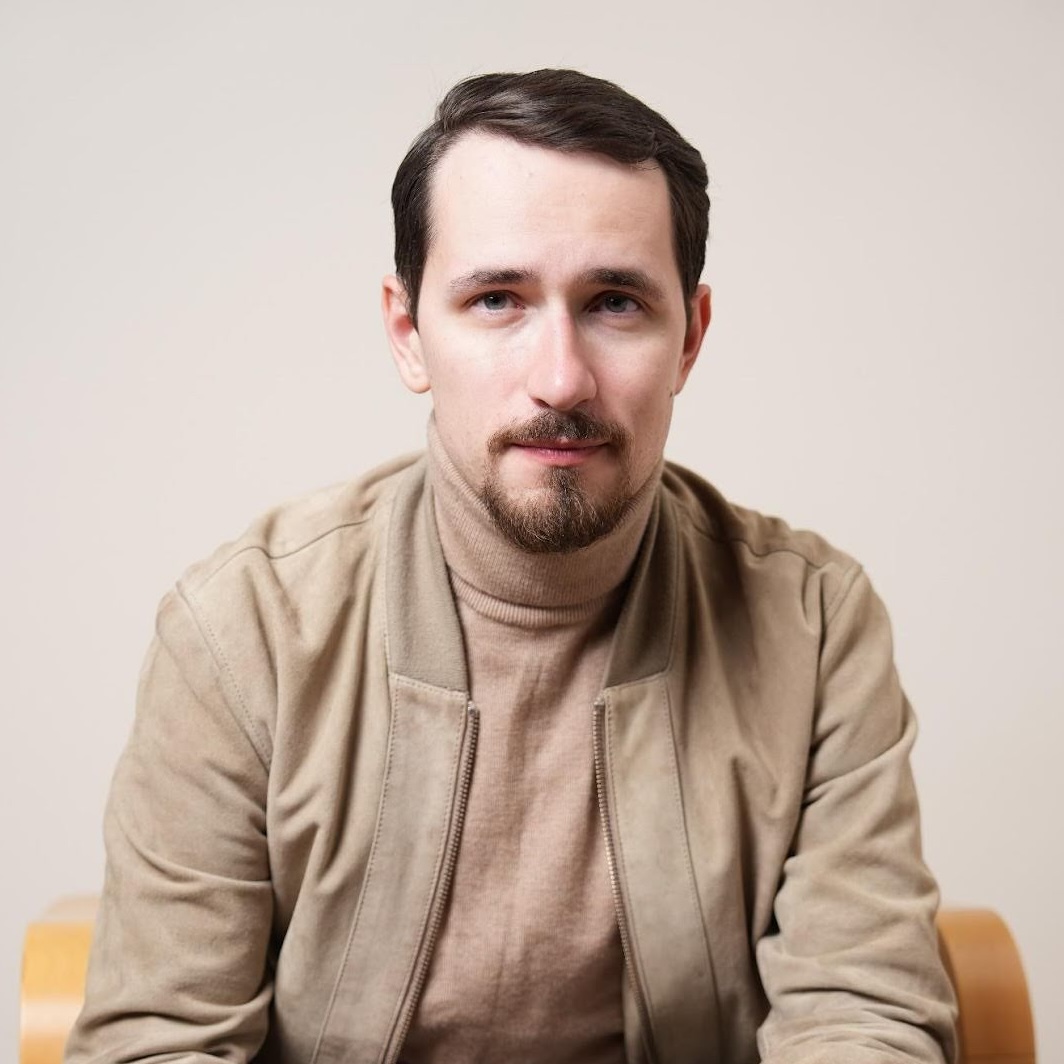
Pavel Shchelin
Pavel Schelin is a Russian political theologian and Orthodox Christian thinker who bridges Western and Eastern traditions of political theology. He studied at Central European University in Budapest, focusing on political science, media studies, and Russian foreign policy. His academic work includes peer-reviewed research on information warfare, digital media, and the symbolic dimensions of contemporary geopolitics.
Shchelin teaches at Otium Academy, offering adult education courses on political theology, international relations, and the philosophy of history. He employs a unique "symbolic reading" methodology to reveal eternal patterns of power, desire, and political community in historical texts, particularly Plutarch's Lives. Pavel co-hosts the Russian-language podcast "In the Search of Meaning" with Eugene Golub and maintains a YouTube channel providing widely acclaimed political, cultural, and theological commentary on current events.
His thought is deeply influenced by Russian religious philosophers (Berdyaev, Ilyin, Karsavin) and Western political theologians (Voegelin, Schmitt, Agamben), while drawing particularly on the patristic tradition of St. Maximus the Confessor. Through his collaboration with The Symbolic World, Pavel serves as a cultural bridge-builder in both directions—helping Western audiences understand Russian Orthodox perspectives while introducing Russian audiences to Jonathan Pageau's work on symbolism and meaning.
In 2025, he partnered with The Symbolic World to offer "Plutarch: Symbolism in History" to English-speaking audiences. Pavel's mission is to help people recognize that history's patterns repeat, teaching them to read political events symbolically and recover wisdom for navigating contemporary crises.
